Protecting Your Roof Edge from Termites and Moisture Rot
· R&C Roofing Contractors
The outer edge of your roof is one of the most vulnerable parts of the house. Fascia boards, soffits, and the wood behind the gutters sit at the meeting point of rain, humidity, and wind-driven moisture. On Oahu these surfaces stay damp longer than they would in drier climates. Once wood remains wet, decay fungi take hold and Formosan subterranean termites find an open invitation.
The damage often starts small. A soft spot in the fascia, a section of soffit that feels spongy, or a gutter that has pulled away from the house. Left alone, the problem can move inward into rafter tails and the roof deck. Preventing that progression depends on keeping the edge dry, maintaining airflow where it belongs, and catching early signs before they spread.
How Moisture Reaches the Roof Perimeter
Water arrives at the roof edge in several ways. Overflowing or poorly pitched gutters dump water directly onto the fascia. Wind-driven rain pushes moisture under the drip edge and against the wood. Condensation can form on the underside of the roof deck when attic air is trapped and humid. In windward and valley locations the ambient humidity rarely drops low enough for the wood to dry fully between rain events.
Once moisture is present, fungal decay softens the cellulose in the wood. Soft wood is easier for termites to excavate. Termites are also drawn to the higher moisture levels. The two problems frequently appear together. What begins as a localized wet fascia board can become a pathway into the larger roof structure.
The Role of Fascia, Soffit, and Ventilation
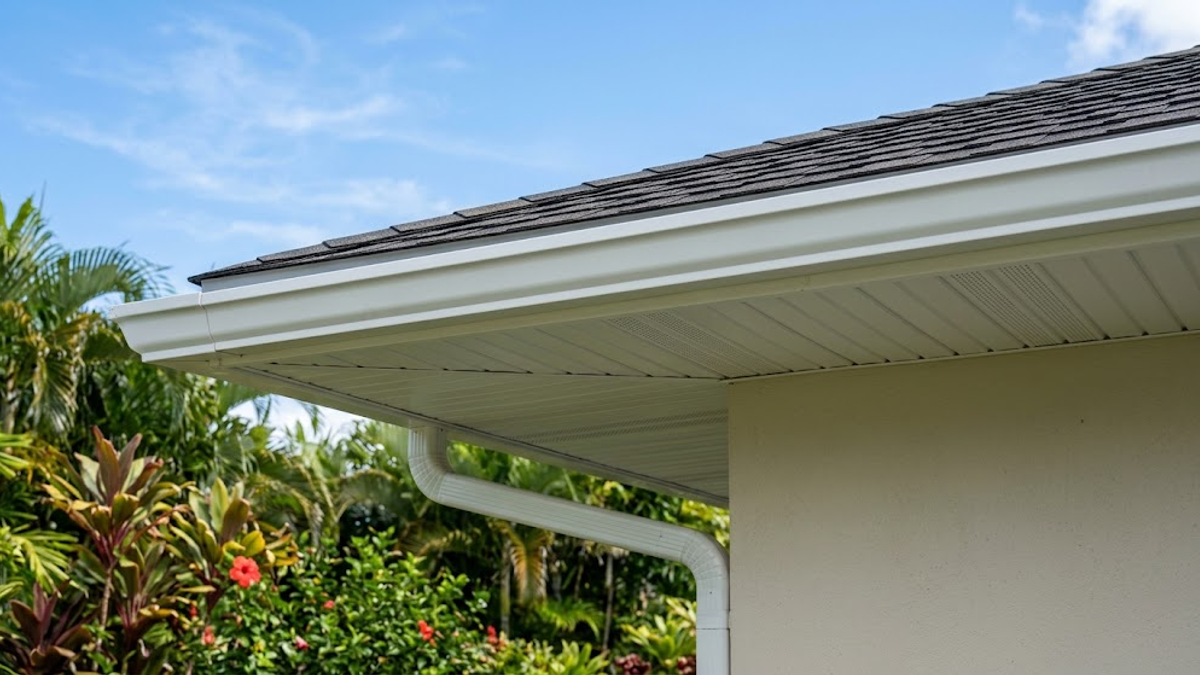
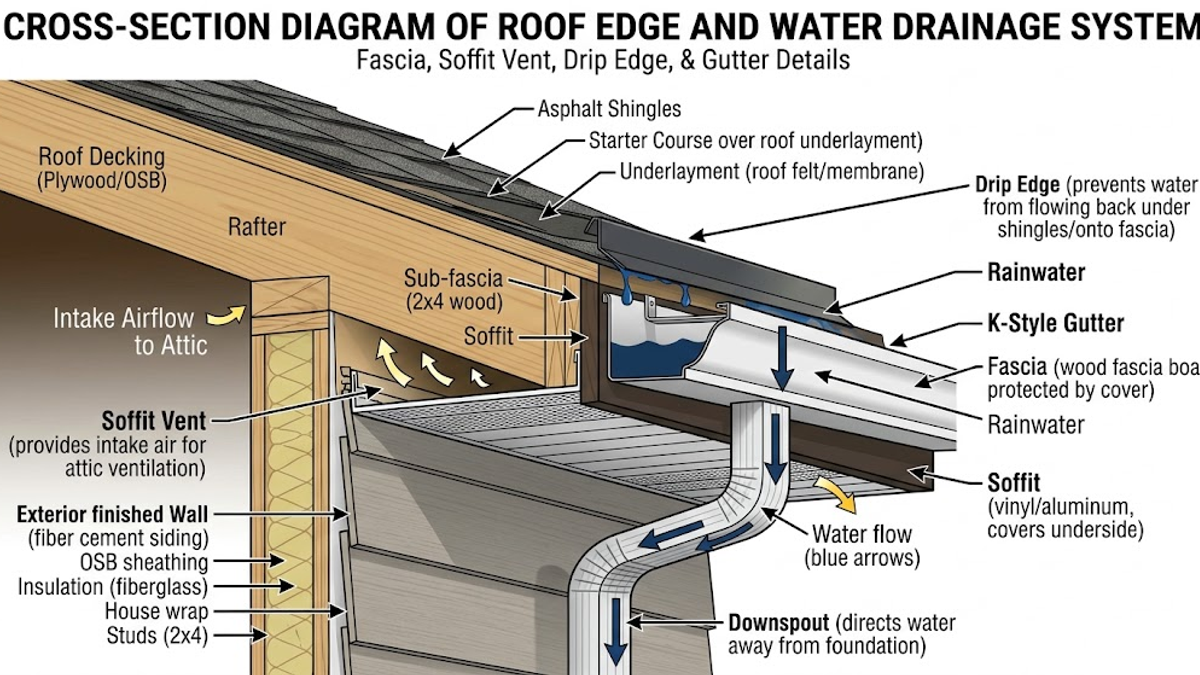
The fascia is the vertical board that runs along the edge of the roof and supports the gutters. The soffit is the horizontal surface underneath the overhang. Together they close off the eaves and, when properly designed, allow controlled airflow into the attic.
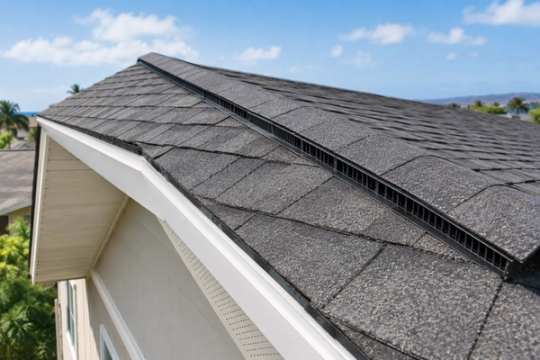
Soffit vents serve as the intake side of attic ventilation. Cooler outside air enters through the soffit, rises, and exits at the ridge or other high vents. This movement helps remove moisture-laden air before it condenses on the underside of the roof deck. When soffit vents are blocked, painted shut, or missing, the attic can hold humidity. That trapped moisture contributes to deck and rafter decay over time.
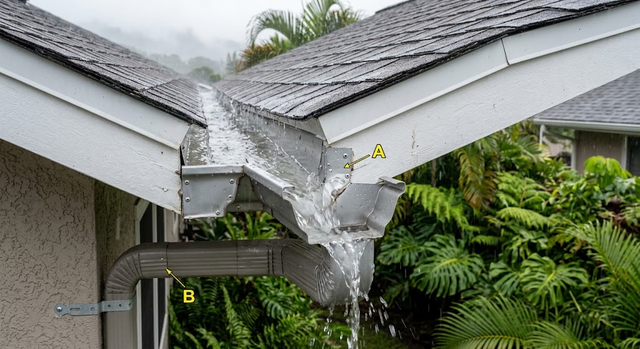
Keeping the fascia sound is equally important. Gutters hang from it. If the fascia softens or pulls away, the gutter system loses its support and can overflow or separate, sending still more water onto the wood. A continuous metal drip edge that extends into the gutter helps kick water away from the fascia face and reduces the amount of moisture that reaches the wood.
Practical Steps That Keep the Edge Dry
Several maintenance actions reduce the conditions that favor both rot and termites.
- Keep gutters clear and properly pitched so water moves to the downspouts instead of spilling over the edge.
- Confirm that downspouts discharge several feet away from the foundation and do not splash back against the siding or fascia.
- Check that soffit vents remain open and unobstructed by insulation, paint, or debris.
- Inspect the fascia for soft spots, peeling paint, or gaps where water can enter. Press gently with a screwdriver in suspicious areas. Soft wood yields under light pressure.
- Look for mud tubes, frass, or hollow-sounding sections that may indicate termite activity. These signs warrant a separate pest evaluation in addition to any roofing work.
- Ensure the drip edge is intact and directs water into the gutter rather than behind it.
These checks can be done from the ground or a stable ladder at the eave. Do not climb onto the roof surface itself unless you are trained and equipped for it.
| Roof Edge Component | Common Problem on Oahu | Protective Action |
|---|---|---|
| Fascia | Softening from constant moisture or termite tunneling | Keep gutters functional; replace damaged sections with rot-resistant material |
| Soffit | Blocked vents or water intrusion | Maintain clear intake vents; repair or replace damaged panels |
| Drip edge | Missing or bent metal allowing water behind the fascia | Install or restore continuous metal drip edge that seats in the gutter |
| Gutters | Overflow or separation from the fascia | Clean regularly; ensure correct pitch and secure attachment |
| Attic space | Trapped humid air leading to condensation | Confirm soffit-to-ridge airflow path remains open |
What We See During Roof Inspections
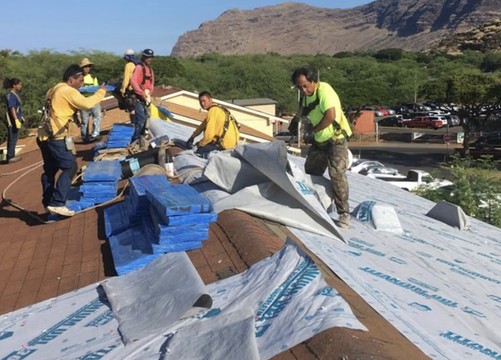
When we evaluate a roof on Oahu we look beyond the surface covering. The perimeter wood is part of the system. Soft or deteriorated fascia can affect gutter performance and allow water to reach the roof deck. Compromised rafter tails reduce the solid nailing surface needed for secure installation. Visible signs of moisture or insect activity at the edge are documented so you have a clear picture of the actual condition.
We are a roofing contractor, not a pest control company. If termite activity is evident we note the locations and recommend that a licensed pest professional assess and treat as needed. Our focus remains on the roof structure, the weather barrier, and the drainage components that keep water moving away from the wood.
You can review the full scope of our residential services, including targeted repairs and gutter work that supports the roof edge, on our services page. Our roof inspection process is designed to identify these perimeter conditions before they require larger structural work.
When Edge Damage Affects the Larger Roof
Isolated fascia or soffit damage is often repairable without disturbing the main roof covering. When decay has moved into the roof deck or rafters, the scope expands. Soft decking cannot hold new fasteners securely. In those cases the damaged wood must be replaced so the new roofing system has a solid base.
Starting with an accurate assessment keeps the response proportionate. Many homes need only localized edge repairs and improved drainage. Others require more extensive reconstruction. The difference becomes clear once the wood is examined.
If storm-related water intrusion or other damage raises insurance questions, we can document the visible roofing conditions. We provide contractor-side information only. We do not negotiate settlements or act as public adjusters. Details appear on our claims page.
Simple Monitoring Habits
After periods of heavy rain, walk the perimeter and look at the fascia and gutter line. Note any new staining, separation, or soft spots. Keep the gutters free of leaves and debris, especially in neighborhoods with heavy tree cover. If you notice mud tubes or piles of fine wood particles near the eaves, contact a pest professional promptly.
These habits cost little time and catch problems while they are still manageable.
Frequently Asked Questions
Can I paint over soft fascia to protect it?
Paint will not restore strength to decayed wood. The soft material should be removed and replaced. Painting over it simply hides the problem until the next inspection or failure.
Do termites always start at the foundation?
Formosan subterranean termites can enter at multiple points, including damp wood at the roof edge. Moisture at the eaves creates conditions they favor.
Is fiber-cement or composite fascia better in Hawaii?
Materials that do not support fungal growth or termite feeding reduce long-term risk. The choice depends on the specific project and local exposure.
How does attic ventilation connect to edge rot?
Blocked soffit vents allow humid air to remain in the attic. Condensation on the underside of the deck contributes to decay that can eventually reach the perimeter.
When should I call for a roof inspection related to the edge?
If you see soft fascia, separated gutters, interior stains near the eaves, or signs of insect activity, a professional evaluation clarifies the extent of any damage and the practical next steps.
Keep the Edge Dry and Sound
The roof edge is a small percentage of the total roof surface, yet it controls a large share of the moisture risk. Sound fascia, clear soffit ventilation, functional gutters, and an intact drip edge work together to keep wood dry. Dry wood is far less attractive to decay fungi and termites.
If you have noticed soft spots, peeling paint at the eaves, gutter problems, or other warning signs, start with a clear assessment of the actual condition. Call R&C Roofing Contractors at (808) 888-2524 or request a free inspection and estimate through our contact page. We serve residential properties across Oahu under Hawaii Contractor License CT-33642. Inspections and estimates are free. Written reports carry a separate fee quoted in advance.